
From the founder
The invisible load of dementia caregiving
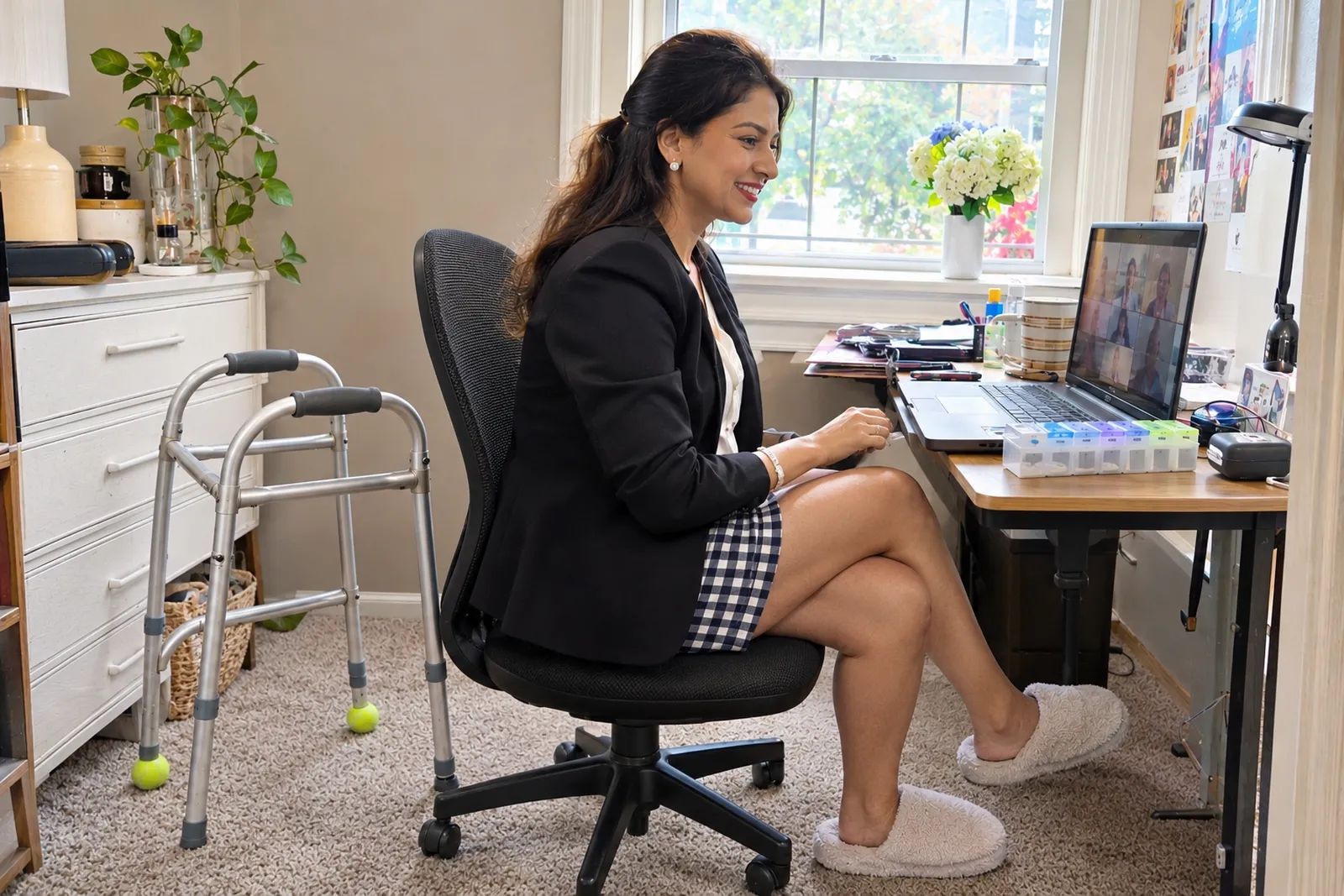
It is seven in the morning, and before her father is out of bed, a caregiver has already made a dozen decisions.
Has he slept? Is today a day for the blue shirt, the one he puts on without an argument? The pharmacy said the refill would be ready Thursday, and it is Wednesday, so should she call? Her sister said she would come on Saturday. Will she? And what is for lunch that he will actually eat?
None of this appears on any list of caregiving tasks. Nobody sees it happen. By lunchtime there will be fifty more.
This is the invisible load of dementia caregiving, and I think it is the part of care we talk about least and understand worst.
What follows is mostly about the early and middle stages, while the person still lives at home. Later stages, and the time after a move into care, bring a different kind of weight, and I will write about those separately.
What the invisible load is
When people describe caregiving, they usually describe tasks. Bathing, meals, appointments, medication. Those are real and they are hard.
Underneath them runs a second job that is much harder to see. It is the work of remembering, anticipating, deciding and checking, all day, often all night. Psychologists call this cognitive load. In family life it is often called the mental load.
In my years working on behavior change, one idea has stayed with me. In their book Scarcity, Sendhil Mullainathan and Eldar Shafir show that when people are short of something that matters, the shortage itself takes up mental bandwidth. Less is left for planning, patience and looking after yourself. Caregivers are often short of sleep and time together, and sometimes money as well.
Why dementia makes it heavier
Every caregiver carries some of this load. Dementia adds weight in particular ways.
You are deciding for two people. The decisions your mother or husband used to make for themselves slowly become yours, on top of your own.
The rules keep changing. What calmed him last month may not work this month, so you are always testing, watching and adjusting.
Much of it cannot be planned. You stay on watch even when nothing is happening, and that watchfulness is tiring in itself.
The load also falls on people who are not doing the hands-on care. A son managing his mother's care from another state, or a daughter making the decisions while an aide does the bathing, carries it too, often with the extra worry of not being there.
And it goes on for a long time. Family and other unpaid caregivers of people with dementia in the US gave an average of nearly 31 hours of care a week in 2024, and well over half of those caring at home had been doing it for four years or more (Alzheimer's Association, 2025 Facts and Figures).
Why nobody sees it
A finished task leaves evidence behind. There is a meal on the table, a clean shirt, an appointment kept. A decision leaves nothing behind unless it goes wrong.
Family who visit on a Sunday see a calm afternoon. The forty choices that made it calm stay invisible.
That gap is where a lot of caregiver loneliness and resentment grows, because the hardest part of the work is the part nobody thanks you for.
Small ways to lighten it
None of these makes the load disappear. Each one takes a little of it off your mind.
- Get it out of your head. Write down everything you are holding, in one place. A notebook works. Your brain is a poor filing cabinet when it is tired.
- Decide once. Turn repeat decisions into standing rules. The same breakfast on weekdays, the same few outfits, the same day for the pharmacy run. Each rule is one less choice every morning.
- Shrink the next step. "Sort out Dad's paperwork" is too big to start. "Find the insurance letter" is not.
- Hand over a whole area. Instead of asking a sibling to help more, ask them to own one thing completely, the bills or the pharmacy, including the remembering.
- Say it out loud. Tell the people around you about the decisions, as well as the tasks. People cannot help carry what they cannot see.
Why I am writing about this
I am building OneSelf, a companion for dementia caregivers, because of this problem. Everything in it is judged by one question: does this take something off the caregiver's mind? A small example: when an insurance letter arrives, OneSelf reads it and tells you in plain words what it needs and by when, then sets the reminder. One less thing to hold in your head at 7 in the morning.
I will keep writing about what caregivers teach me. For now, if you recognize yourself in this, the first step is simply to notice how much you are carrying. It is more than anyone can see, and it counts.
Keep reading
If you are feeling overwhelmed or hopeless, you can call or text 988 in the US at any time.