
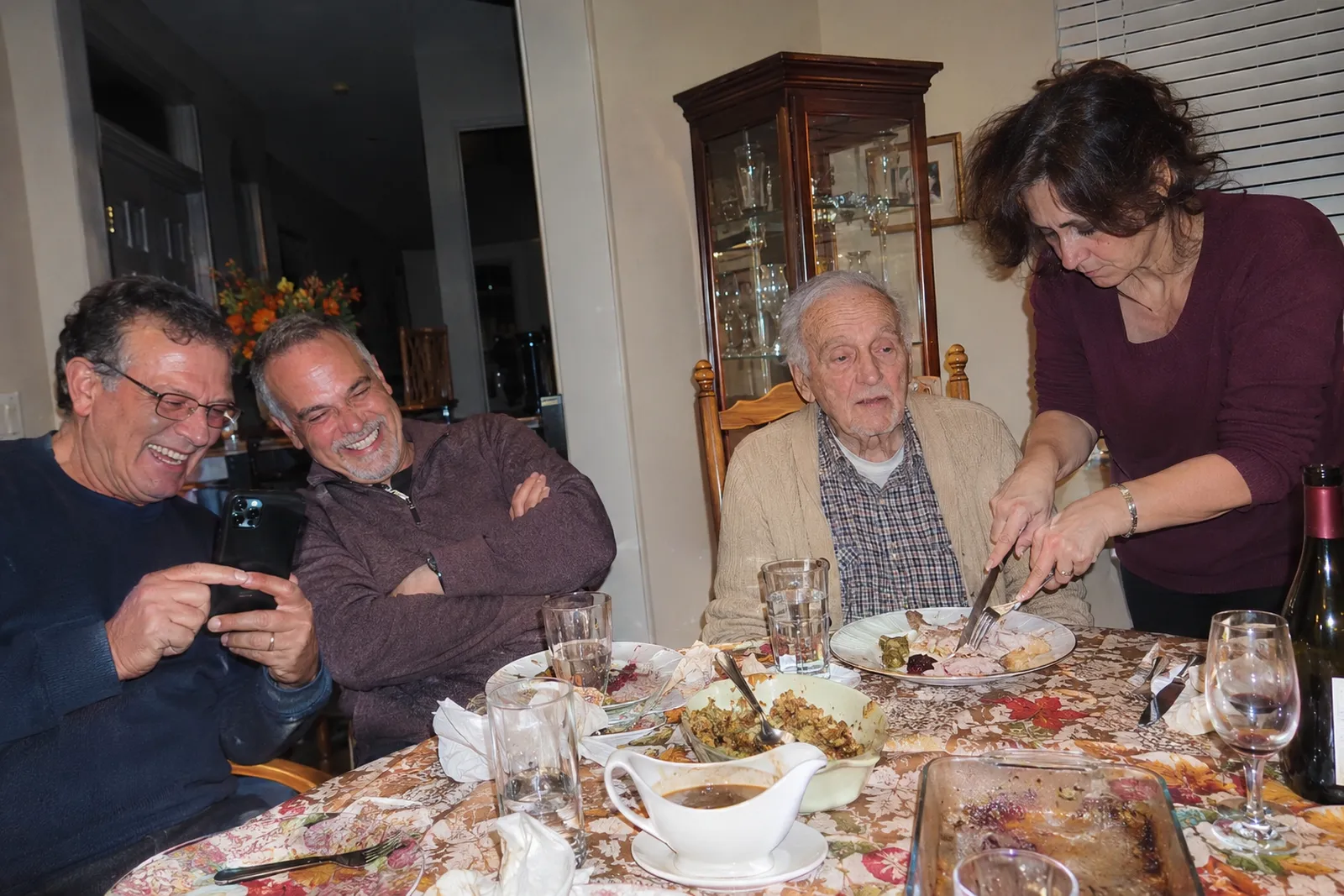
I have two brothers. One lives forty minutes from Dad. One lives in Denver. For the first eighteen months after Dad's diagnosis, I did roughly everything, and I was furious about it. Here's what I got wrong, and what actually worked.
1. I waited for them to offer.
They didn't. They're good people. They genuinely had no idea what "everything" was. From the outside, Dad looked mostly fine at family dinners. He's charming for two hours. They never saw hour six.
2. I kept score in my head instead of on paper.
I could have told you, to the minute, how many hours I'd spent at Dad's that month. I never told them. I just got colder on the phone and they couldn't figure out why.
So one Sunday I wrote it all down. Every appointment, every pharmacy run, every call to the insurance company, the weekly pill organizer, the 11 p.m. "I can't find my keys" calls. It came to about 30 hours a week. I sent the list to the family group chat with no commentary.
My younger brother called within ten minutes. "I didn't know it was that much." He sounded embarrassed.
3. I asked for "help." I should have asked for Tuesdays.
"Can you help more with Dad?" gets you "of course!" and then nothing. "Can you take him to his Tuesday appointments from now on?" gets you a yes or a no. Either answer is useful. I got a yes.
4. The brother in Denver can't drive Dad to the dentist. He can do other things.
This took me a while. I'd written off my older brother because he was far away. Then I made a list of everything that can be done from a laptop. Fighting with the insurance company. Refilling prescriptions online. Researching adult day programs. Paying the bills. He took all of it. He's actually better at the insurance calls than I am, because he doesn't cry when they put him on hold for forty minutes.
5. We had one real meeting, with an agenda.
We set up a video call on a Sunday, one hour, with a list: what Dad needs now, what he'll probably need next year, money, who does what. We were adults about it for almost the whole hour. There was one bad moment about selling the house. We parked it and came back to it a month later, which turned out to be the right call.
6. I let them do it their way.
My younger brother takes Dad for burgers after his appointment, which isn't on Dad's diet, and lets him tell the same fishing story twice. For about a week I wanted to correct him. Then I realized Dad comes home from Tuesdays happier than from any day with me. My brother's way isn't my way. That's fine. It's still help.
7. I said the resentment out loud, once, calmly.
I'd tried a midnight text before and it went nowhere. This time I said it on the phone on a Saturday morning, after coffee: "I've been angry at you both for a year, and I don't want to be. I need this to be more even." Nobody argued. I think they'd been waiting for me to say it.
Where we are now
It's not equal. I still do more. I live closest and I know Dad's rhythms best, and honestly part of me wants to be the one who knows. But I went from about 30 hours a week to about 18, and the group chat is mostly logistics now instead of silence. Last month my older brother flew in for a long weekend so I could go away. I slept eleven hours in a hotel and woke up not angry at anybody.
If you're the sibling doing most of it: write it down, ask for specific things, give the far-away ones laptop jobs, and say it out loud once. You might be surprised who steps up when they finally see the list.
Questions people ask
What can I do when my siblings won't help with a parent with dementia?
This caregiver found three things made the difference: writing down every task and the hours involved and sharing it, asking for specific recurring jobs instead of general help, and holding one planned family meeting with an agenda.
How can siblings who live far away help with dementia caregiving?
Many tasks can be done remotely, such as insurance calls, online prescription refills, paying bills and researching local services. A far away sibling can also give the main caregiver a break by visiting for a weekend.
Keep reading
This story is told in the voice of a family caregiver. Names and details are illustrative, drawn from what many caregivers describe.
If you are caring for someone and it feels like too much, you can call or text 988 in the US at any time. The Caregiver Action Network helpline is 1-855-227-3640.