
Practical guide
Caring for a Parent With Dementia? How to Organize Their Medical, Legal and Financial Documents (Free Checklist)
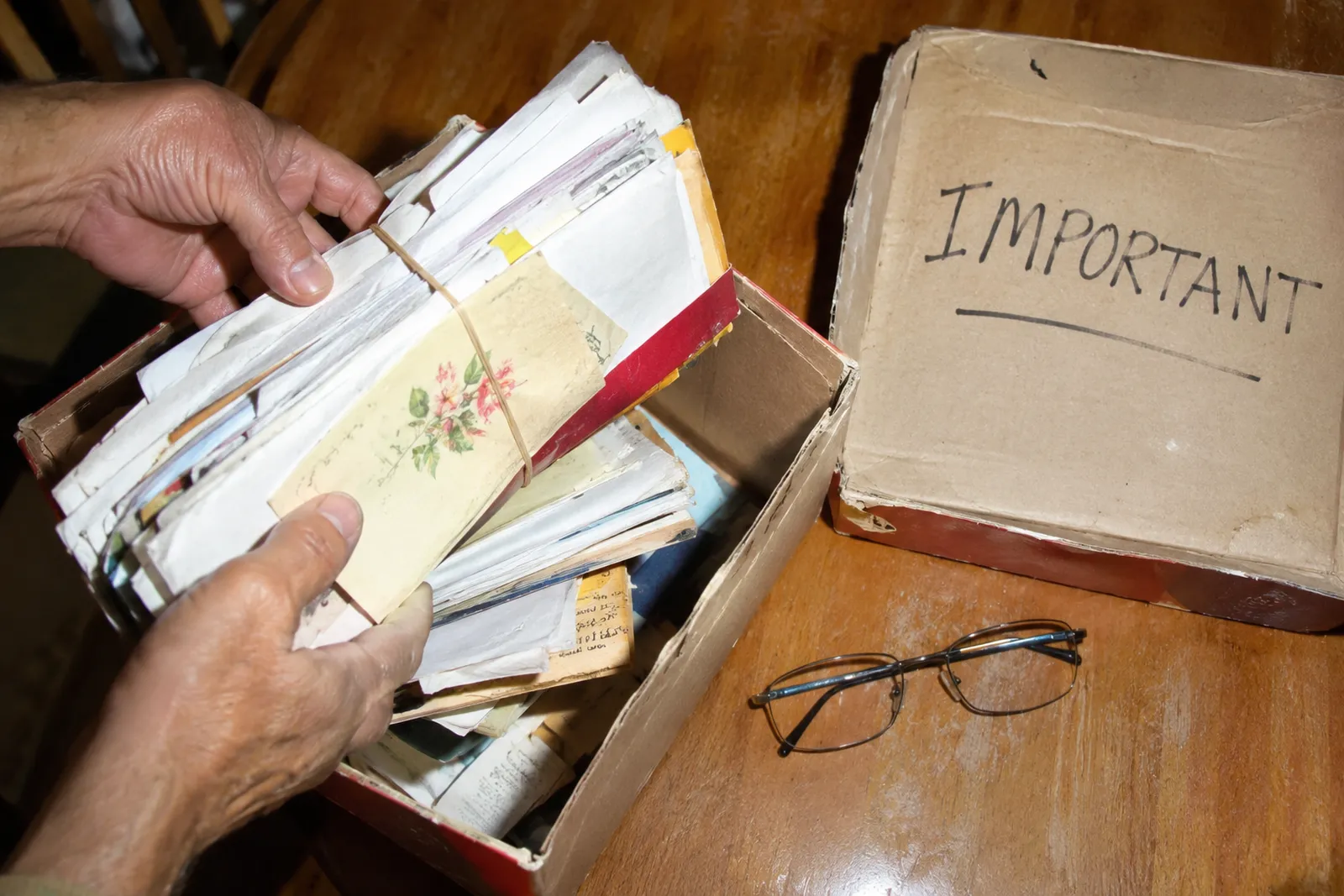
Somewhere in your parent's home there is a drawer, a shoebox or a filing cabinet that holds their whole life on paper. When a parent has dementia, finding and organizing those documents becomes one of the most important jobs you'll do.
Done early, it saves you from missed bills, lapsed insurance and panicked searches in an emergency. This guide lists the documents to find, explains why each one matters, and gives you a simple system to keep it all in order.
For adult children and other family members managing a parent's affairs, including from another city. This is general information, not legal or financial advice. Rules differ by state.
Why organizing documents matters so much with dementia
As dementia progresses, your parent will find it harder to remember where things are, to manage money and to make decisions. If documents are scattered, you may find out about an unpaid bill only when a service is cut off, or about an expired policy only when you need it. Some legal documents can only be signed while your parent can still understand them, which is why time matters.
The documents to find: a checklist
| Document | Why you need it |
|---|---|
| Medical | |
| Medicare card and any supplemental or Medicaid cards | Needed at every appointment and pharmacy visit |
| Current list of medicines and doses | Prevents dangerous mistakes, especially in emergencies |
| Doctors' names and phone numbers | So you can reach the right person quickly |
| Recent visit summaries and test results | Helps new doctors and specialists |
| Legal | |
| Durable financial power of attorney | Lets a trusted person handle money matters |
| Healthcare power of attorney or proxy | Names who can make medical decisions |
| Advance directive or living will | Records your parent's wishes about medical care |
| HIPAA authorization | Allows doctors to share information with you |
| Will and any trusts | Sets out your parent's wishes for their estate |
| Money and home | |
| Bank, retirement and investment account details | To track income and pay bills |
| Social Security and pension statements | Confirms regular income |
| Insurance policies, including long-term care insurance | May cover care costs later |
| List of recurring bills and automatic payments | Prevents missed payments and spots scams |
| Property deed, lease or mortgage papers | Needed for any housing decisions |
| Recent tax returns | Useful for benefits applications |
| Identity and digital | |
| Driver's license or state ID, birth certificate, Social Security card | Proof of identity for benefits and services |
| List of online accounts | So bills and benefits aren't lost behind passwords |
How to organize your parent's documents in 6 steps
- Choose one home for everything. One box, one binder or one secure app. The worst system is three half-systems.
- Sort into three groups. Medical, legal and money. Simple categories are easier to keep up when you are tired.
- Keep originals safe and make copies. Store originals of legal papers somewhere secure, such as a fireproof box. Keep copies or photos where you can reach them quickly.
- Write down every deadline. Insurance renewals, benefit reviews, prescription refills and tax dates. Set a reminder a week before each one.
- Share a list with family. Siblings don't need every document, but they should know what exists and where it lives, in case you are unavailable.
- Make a one-page emergency sheet. Diagnosis, medicines, allergies, doctors, insurance numbers and who holds healthcare power of attorney. Keep it on the fridge and on your phone.
How OneSelf helps with your parent's documents
We built OneSelf partly because of this exact shoebox. In the app's Docs section you can:
- Keep everything in one place. Add a photo or file of each document and sort it into folders, so the box, the binder and the drawer become one list on your phone. Storing documents is free.
- Let OneSelf read the letters for you. When a letter arrives from Medicare, the bank or an insurer, OneSelf reads it, tells you in plain words what it needs and by when, and sets the reminder for you.
- Have it with you when it matters. At the pharmacy counter or in the emergency room, the cards and the medicine list are already in your pocket.
Document reading is part of the paid plan, and the annual plan lets you try everything free for 10 days. Start your free trial.
If you're managing from a distance
Many families care for a parent from another city or state. Take photos of every document on your next visit, and ask a local friend or neighbor to know where the emergency sheet is kept. Ask your parent's bank and doctors which forms they need so you can speak on your parent's behalf.
Frequently asked questions
What legal documents does a person with dementia need?
Most families start with a durable financial power of attorney, a healthcare power of attorney, an advance directive, a HIPAA authorization and an up-to-date will. An elder law attorney can advise on what your state requires.
Where should I keep my parent's original documents?
Keep original legal documents somewhere secure, such as a fireproof box or with your attorney, and keep copies where you can reach them quickly in an emergency.
Can I sign documents for my parent with dementia?
Only if you have the legal authority to do so, usually through a valid power of attorney. Without it, you may need to go through a court process such as guardianship, so it is worth setting up a power of attorney early.
Keep reading
This article is general information and is not medical, legal or financial advice. If you or someone you care for is in crisis, call or text 988, or call 911 in an emergency.